Giacomini Under Floor Heating System
From a strictly technical standpoint, radiant floors are hydronic systems balancing the sensible loads of air-conditioned spaces.
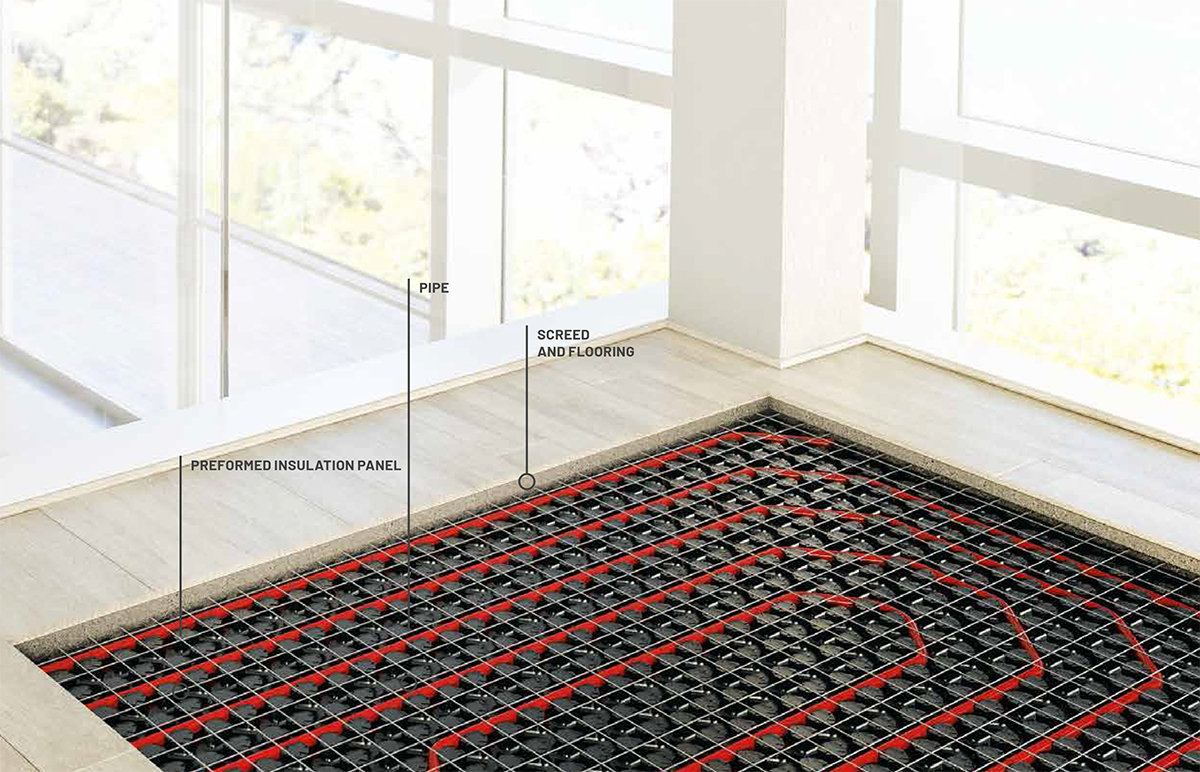
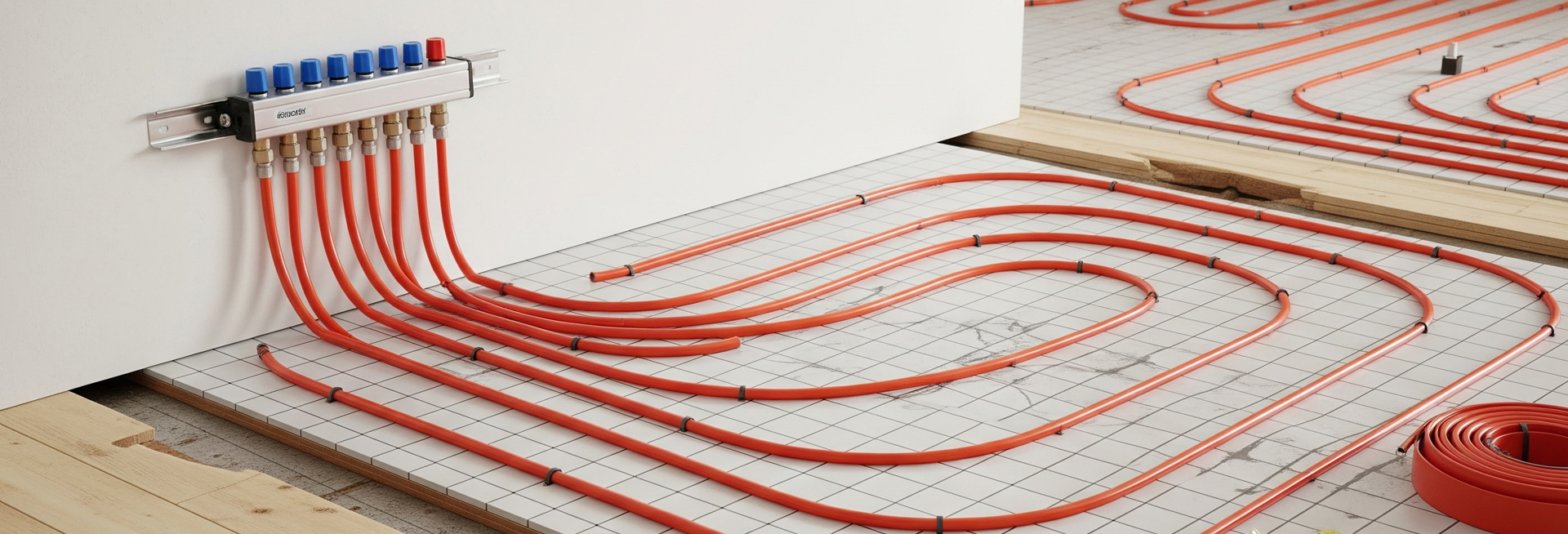
From a more “functional” and basic perspective, they provide ideal comfort inside living environments. The water flowing through the imbedded pipes, which are drowned in the concrete layer, represents the heat transfer fluid that actually turns the entire flooring into an invisible radiant system.
Radiant floors, with their natural simplicity, are but one of man’s many successful attempts to translate a spontaneous phenomenon from nature into technology: thermal exchange by irradiation. The sun transmits heat to the Earth according to the same mechanism, an effect anyone can recreate by standing in the sun under a blue sky on a winter day: with a 9-10 °C air temperature one just needs a sweater to feel comfortable. And we all know that sweaters of different colors make us feel more or less warm. This is known as irradiation; we cannot touch the sun and air can only make us feel cold, but the percentage of irradiation heat is higher than the one which cold air takes from us: the general feeling is pleasant.
Radiant floors reproduce the same effect. Radiant systems have experienced a rapid growth thanks to their ability to heat while ensuring an ideal temperature distribution. The technological evolution of thermoregulation devices has made them very popular also for summer cooling - a winning alternative to air conditioners - thus becoming reversible systems to be used for the entire thermal cycle of the residential unit.
Hydronic radiant floors work with a small difference of temperature between water and the room to be heated/cooled, both for winter heating and summer cooling, as well as between the room and the external air: this is why they can be defined systems with a reduced temperature difference. Thermal-hygrometric comfort, energy saving, excellent exploitation of renewable source energy, ideal use of the spaces: these are all beneficial aspects that have made the “invisible system” popular both for new constructions and renovation works.